Sleep science · Mattress education
Latex Mattress Layers: Resilience, Feel, and What to Consider
Latex is known for a buoyant, responsive feel: it yields under pressure, then springs back as the body moves. How that sensation translates into comfort depends on more than the material alone. Layer thickness, firmness, the mattress beneath it, and the sleeper’s position all help shape the experience.
Published November 1, 2026
Press a hand into a latex surface and the material seems to answer at once. It compresses, supports the pressure, and rises back when the hand lifts. That quick recovery is one reason latex mattresses are often described as lively or buoyant, in contrast with materials that respond more slowly and seem to hold a deeper impression for a moment.
But “latex” is not a complete description of how a bed will feel. A mattress is a system of layers, each with a role: cushioning, pressure distribution, support, and, sometimes, temperature management. The amount of latex, its firmness, its position in the construction, and the layers around it can all change the result. Even two beds made with latex can feel markedly different.
Understanding those layers offers a more useful starting point than relying on a single label such as soft, firm, natural, or responsive. It can help explain why one surface feels comfortably springy while another seems too yielding, too firm, or simply unlike what a sleeper expected. It also clarifies what a latex topper can—and cannot—change about an existing mattress.
What “resilience” means in a mattress
Resilience describes how a material recovers after pressure is removed. In practical terms, it is part of the reason latex tends to feel responsive. When a sleeper shifts position, a resilient layer generally rebounds rather than remaining compressed for long. That quality can make movement across the bed feel easier, though whether it is welcome is a matter of preference.
Resilience is not the same as firmness. Firmness describes the initial impression of how hard or soft a surface feels when someone lies down. Resilience is about the material’s response and recovery. A mattress can feel soft at first contact yet still rebound readily; another can feel firm but have a less lively response. Neither characteristic, by itself, determines whether the bed will be comfortable or supportive for a particular sleeper.
Nor does resilience mean that a material “pushes” every body in the same way. A person’s weight, shape, sleep position, and the thickness of the comfort layers influence how much the mattress compresses. The same latex layer may feel different to two people, or to one person lying on their back rather than on their side. Comfort is an interaction between body and surface, not a fixed property of a material in isolation.
The mattress as a layered landscape
Most mattresses combine materials with different jobs. A comfort layer sits near the surface and affects the first sensation of contact, cushioning, and pressure response. Beneath it, transition layers may help distribute a load between the softer upper surface and the firmer support structure. The base provides the deeper foundation that helps the mattress maintain its shape under the sleeper.
Latex can appear in one or several of these positions. A relatively thin latex layer near the top may modify the surface feel without defining the whole mattress. A thicker layer can contribute more substantially to cushioning and contouring. In a multi-layer design, different latex firmnesses may be combined to create varied responses through the depth of the bed. The underlying construction still matters: a soft upper layer cannot by itself describe the support or feel of the complete mattress.
Layer thickness changes how far the body can settle into the surface before meeting firmer material below. A thin layer may provide a subtle change in pressure response, while a thicker one can create a more pronounced cushion. Yet thickness alone does not tell the entire story. A thick, firm layer may feel more supportive than a thinner, softer layer, and the firmness of the mattress underneath may become noticeable as the top layer compresses.
For this reason, construction details are most useful when read together. Ask what material is in each layer, how thick it is, and how the layers combine. A simple description of the top layer may not reveal how the bed will behave under shoulders and hips, where pressure and compression can differ from one sleeper to another.
Firmness is a perception, not a universal scale
Firmness ratings can help organize choices, but they are not a universal measurement of comfort. A label such as “medium” is an estimate, and the sensation it describes can vary between manufacturers, models, and people. Body weight affects how deeply a sleeper compresses a mattress; body shape affects where that pressure is concentrated. A surface that feels gently cushioned to one person may feel distinctly firmer to another.
Sleep position adds another dimension. Side sleepers often place more concentrated pressure around the shoulders and hips. A surface that yields enough in those areas may feel more comfortable, while a layer that is too firm for the individual can feel unyielding. Back sleepers may prefer a balance in which the surface cushions contact points while the deeper layers provide a stable, supported feel. Stomach sleepers may be especially attentive to excessive sinking around the midsection, though needs still vary.
These are tendencies, not rules. No sleep position dictates one ideal latex firmness, and a person may change positions during the night. The practical question is whether the mattress feels comfortable over time and provides a stable surface for that sleeper. When possible, testing a mattress in a realistic position for more than a brief moment can reveal more than a quick press of the hand.
It can also help to notice specific sensations instead of trying to select a rating in the abstract. Does the shoulder feel compressed? Do the hips sink farther than feels comfortable? Is it easy to change position? Does the surface feel balanced, or does the body seem to rest on top of it without enough cushioning? Those observations provide clearer clues about which construction may suit you.
Pressure response and contouring
Latex can conform to the body, but its response is often described as more buoyant than the slower, closer-molding sensation associated with some other foam materials. Rather than feeling enveloped, some sleepers experience latex as cushioning that follows their outline while making it relatively easy to move. This distinction is about feel, not a guarantee that one material will relieve discomfort or work for everyone.
Pressure response depends on the complete arrangement of materials. A softer or thicker upper layer may allow greater compression at the shoulders and hips; a firmer or thinner layer may feel more restrained. The mattress beneath that layer can influence how far the sleeper settles and how the surface responds. As a result, descriptions such as “contouring” and “supportive” need context: they refer to an experience that emerges from the body, the layers, and the way they work together.
When assessing comfort, consider whether cushioning feels even across the body. A mattress that feels pleasant at the shoulder might not feel the same at the hip or lower back. The goal is not to seek maximum softness or maximum firmness, but to find a surface that feels comfortable and stable in the positions you commonly use.
Temperature and the feel of the surface
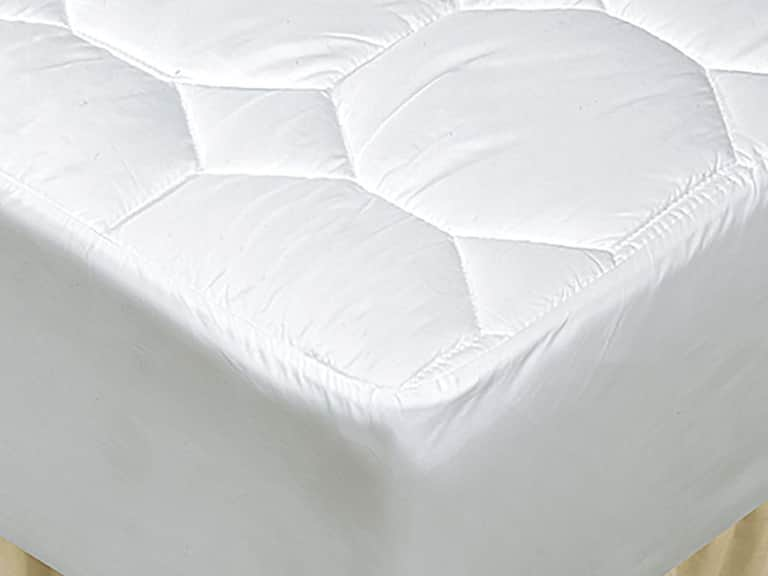
Temperature perceptions are shaped by more than the core mattress material. The room, bedding, sleepwear, humidity, and personal comfort all play a part. Mattress covers and protectors can also affect how readily heat and moisture move away from the body. A breathable-feeling layer may still feel warm to one sleeper, while another finds it comfortable in the same room.
Latex is sometimes discussed in relation to airflow and temperature, but no material label guarantees that a bed will sleep cool. Construction, cover fabric, the depth of the comfort layers, and the sleeper’s own heat sensitivity all contribute. A thick layer of any cushioning material may feel different from a thin one, and a tightly fitted protector can alter the sensation of the surface.
If temperature is a concern, consider the whole sleep environment. Lightweight, breathable bedding, appropriate room conditions, and a protector compatible with the mattress can be as relevant as the type of foam beneath the sheet. Keeping expectations specific and observing what actually feels comfortable is more useful than assuming one material will solve temperature discomfort for every sleeper.
When a latex topper may change the feel
A topper adds a layer over an existing mattress. It can alter the surface cushioning and pressure response, but it does not replace the mattress’s underlying support structure. A topper may be worth considering when the base mattress is in sound condition and feels firmer than desired at the surface. If the mattress has a deep sag, uneven support, or structural damage, adding a softer layer may not correct the underlying problem.
Thickness and firmness help determine how noticeable the change may be. A thinner topper is generally a more modest adjustment; a thicker one can create a more substantial layer between the body and the mattress below. The result still depends on the topper’s construction and the surface it rests on. A soft layer placed over a very firm bed may feel different from the same layer placed over a mattress that already yields considerably.
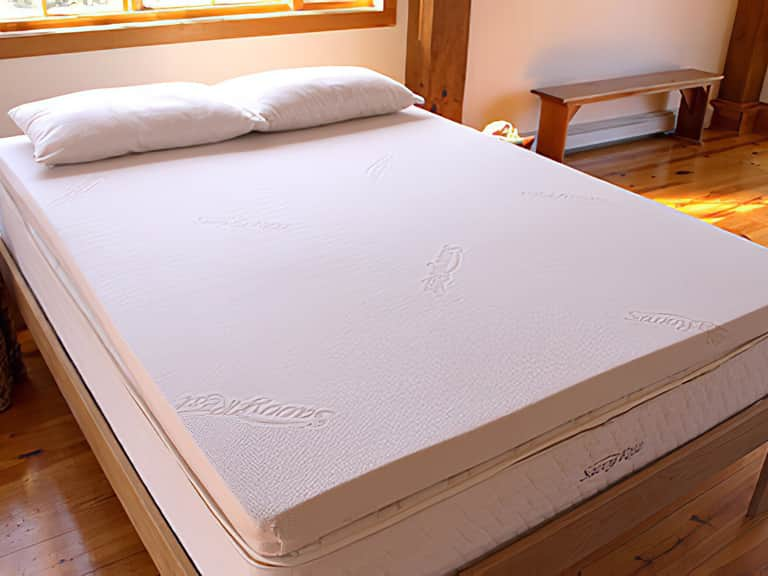
One example is the Savvy Rest Vitality Latex Mattress Topper, described as a three-inch layer of soft natural Talalay latex in an organic cotton stretch-knit cover. As an educational example of a layered surface, it illustrates how a topper can add a distinct cushioning layer above an existing mattress. Its published description presents it as a non-customizable topper, so the listed firmness and thickness are relevant details for anyone considering how it might alter a bed’s feel.
Before choosing a topper, check mattress dimensions, the depth of the existing mattress, and how sheets and protectors will fit once the surface is higher. Consider whether the current issue is about surface firmness or a deeper lack of support. A topper may change one more readily than the other, and comfort remains individual rather than guaranteed by a material specification.
A practical way to evaluate latex construction
Product descriptions can be dense with terminology. A few concrete questions help turn them into useful information:
- Where is the latex? Identify whether it forms the surface comfort layer, a deeper transition layer, or a topper placed above the mattress.
- How thick is each layer? Thickness helps indicate how much of the feel may come from that layer, though firmness and the materials beneath it remain important.
- How is firmness described? Treat the rating as a guide, not a universal promise. Look for an explanation of the scale and the construction behind it.
- What is below the latex? The base and any transition layers help determine how the mattress responds when the upper layers compress.
- How does the cover affect the surface? Fabric, quilting, and protectors can change the first-contact sensation and may influence perceived breathability.
- Can the construction be tested at home or in person? Review trial terms and practical return conditions carefully, where applicable. A brief first impression may not reflect comfort over regular use.
Use the answers to compare like with like. A topper and a full mattress do not perform the same role. Nor can a firmness label substitute for knowing layer thickness or the structure beneath it. The more precisely a description explains construction, the easier it is to form a realistic expectation—though personal testing remains valuable whenever available.
Common misconceptions about latex mattresses
“All latex feels the same.”
Latex products vary in firmness, thickness, construction, and placement within the mattress. The layers around them matter, too. The word identifies a material family, not one uniform sleep experience.
“More latex automatically means more support.”
Layer quantity does not, by itself, establish support. A mattress’s response depends on the firmness and arrangement of its layers, the sleeper’s body, and how the construction behaves under pressure. Additional thickness may change cushioning and depth of compression, but it is not a stand-alone measure of suitability.
“A responsive feel is right for every sleeper.”
Some people enjoy a surface that rebounds quickly and makes movement feel easy. Others prefer a slower, closer-contouring sensation. Responsiveness is a characteristic to compare, not a universal measure of quality or comfort.
“A topper can fix any mattress.”
A topper can adjust the surface feel, but it cannot reliably correct every problem in a worn or damaged mattress. If the underlying bed is uneven or sagging, a new top layer may simply follow that shape. Understanding the source of discomfort is an important first step.
Care and longevity considerations
Care instructions depend on the specific mattress or topper. Removable covers may have different cleaning requirements from the latex layer itself, and a cover that is not designed to be removed should not be forced off. Check the manufacturer’s guidance before washing, spot-cleaning, or exposing materials to moisture. Proper use of a compatible mattress protector can help limit everyday spills and soiling without changing the latex core.
Support underneath the mattress matters as well. A suitable foundation can help the mattress rest evenly, while an inappropriate or damaged base may affect how the bed performs. Follow the mattress maker’s guidance on slat spacing, frame support, and rotation, if rotation is recommended. Product care directions are not interchangeable: one latex topper may have different handling requirements from another.
Durability is influenced by construction, use, care, and the conditions of the bedroom. A resilient feel does not mean that a material is immune to wear. Regularly checking that the mattress remains evenly supported and following its care guidance are practical ways to protect the sleep surface.
A final perspective on feel and fit
Latex’s quick recovery gives it a distinctive character: pressure is met with cushioning, and the surface returns as the sleeper moves. Yet resilience is only one part of the story. Layer thickness helps shape how much the body settles; firmness influences the initial impression; the deeper construction determines what happens as compression increases. Sleep position, body shape, and personal preference bring those features into contact with an individual body.
When comparing latex mattresses, look beyond a single adjective. Trace the layers from the surface down. Notice where the latex sits and how thick it is. Consider whether the bed offers the amount of cushioning you find comfortable, and whether its response feels natural as you change position. If evaluating a topper, distinguish a surface adjustment from a change in the mattress’s underlying support.
There is no universal best feel. The most useful choice is one that suits the sleeper’s comfort preferences and the way they use the bed. A clear understanding of latex mattress layers makes that decision less about broad promises and more about the observable qualities of the sleep surface.
Key takeaways
- Latex is often valued for resilience and a buoyant response, but that feel varies with construction.
- Firmness, layer thickness, and the materials beneath the latex work together to shape comfort and pressure response.
- Sleep position and personal preference influence how a mattress feels; ratings are guides, not universal measurements.
- A topper can adjust surface cushioning, but it does not replace the support structure of the mattress below.
- Temperature perceptions and long-term care depend on the complete sleep environment and the product’s specific instructions.
This article is for general educational purposes. Mattress comfort is individual, and information about materials is not a substitute for professional medical advice about persistent sleep or pain concerns.